
Wire-O / Spiral Binding
What Is Wire-O / Spiral Binding?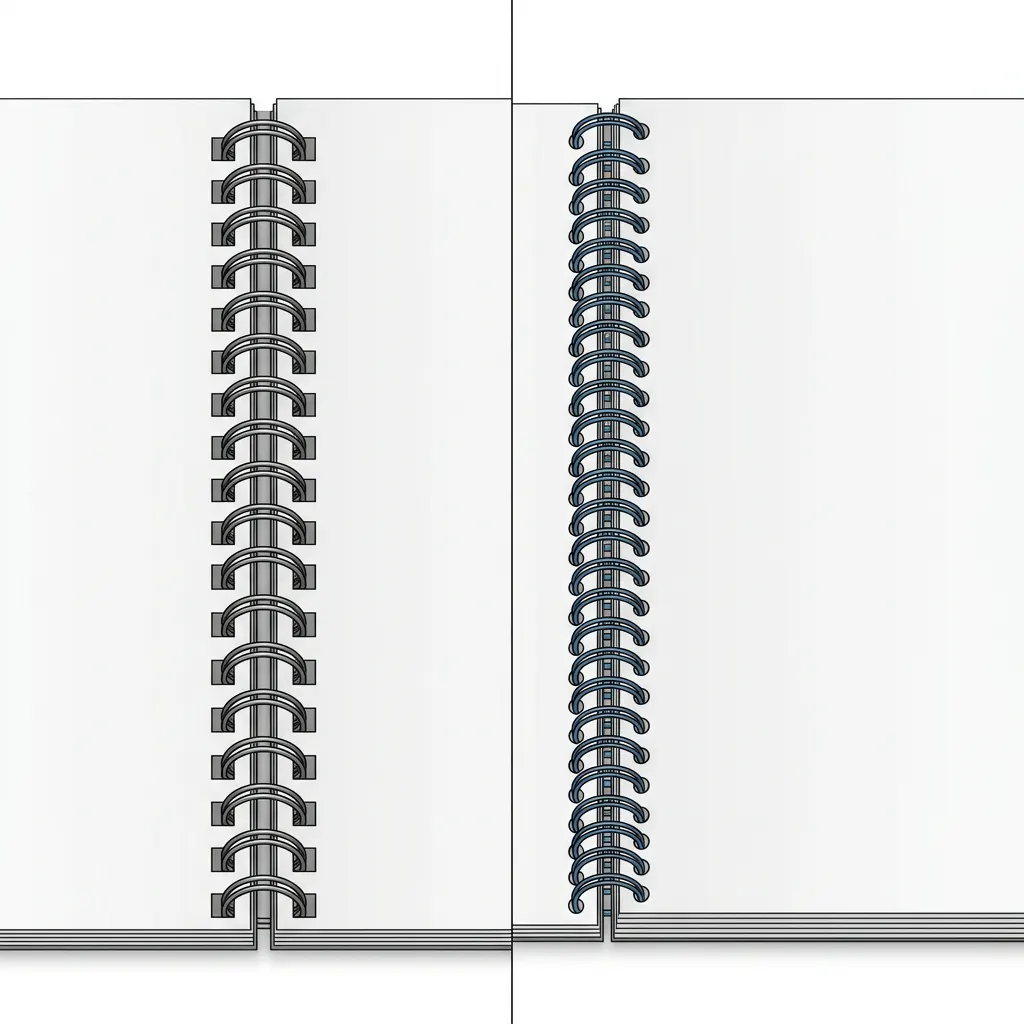
Wire-O (Twin Loop / Double Wire) binding and Spiral (Plastic Coil) binding are two popular mechanical binding methods that allow a book to open a full 360 degrees and lay completely flat. Unlike perfect binding or saddle stitching, mechanical binding uses punched holes along the spine edge and inserts a wire or plastic element to secure the pages. This makes them ideal for workbooks, manuals, notebooks, calendars, and cookbooks — any document that needs to stay open on a desk or be folded back on itself.
Wire-O Binding
Wire-O binding uses a continuous double-loop metal wire that is threaded through rectangular or round holes punched along the spine edge. The wire is then crimped closed by a binding machine, creating a strong, permanent bind. Wire-O is available in standard wire diameters (1:1 pitch for small books, 2:1 pitch for larger books) and comes in white, black, silver, and colored finishes. Wire-O bound books look professional and are common in corporate presentations, premium notebooks, and high-end calendars.
Spiral (Plastic Coil) Binding
Spiral binding uses a single continuous plastic coil that is rotated through round holes punched along the spine. The coil is cut to length and the ends are crimped to prevent unthreading. Plastic coils are available in a wide range of colors (over 30) and diameters to accommodate different page counts. Spiral binding is more economical than Wire-O and is popular for school notebooks, DIY manuals, and promotional workbooks.
Key Advantages
- 360° lay-flat — pages fold completely back on themselves
- No gutter loss — content runs edge to edge, no content hidden in the spine
- Durable — metal wires and plastic coils resist wear from frequent opening
- Mix paper types easily — combine different paper stocks in the same book
- Document can be edited — pages can be removed and reinserted (not typically, but possible with care for spiral)
Limitations
- Not suitable for spine printing — the binding element covers the spine
- Page count limited by coil/wire diameter — typically 30–300 pages
- Holes must be punched accurately — misaligned holes cause page tears
- Wire-O costs more than plastic coil but is more durable
Common Applications
- Workbooks and training manuals — open flat on a desk
- Calendars and planners — flip over the top or fold back
- Cookbooks and recipe collections — stay open at the right page
- Notebooks and journals — fold back for single-handed use
- Corporate presentations and proposals — professional wire-O finish