500 – 100,000 copies
Print Quantity
North America, South America, Europe, Asia, Africa, Middle East, Oceania
Worldwide Shipping
7–15 business days
Turnaround Time

| 500 | 1000 | 2000 | 3000 | 4000 | 5000 | 10000 | 20000 |
|---|---|---|---|---|---|---|---|
| $48 | $58 | $94 | $137 | $172 | $212 | $402 | $803 |
| 500 | 1000 | 2000 | 3000 | 4000 | 5000 | 10000 | 20000 |
|---|---|---|---|---|---|---|---|
| $94 | $129 | $189 | $237 | $283 | $331 | $595 | $826 |




Professional magazine printing services: saddle-stitched and perfect bound. Paper selection, binding options, trim sizes, finishing, and cost breakdown for publishers, brands, and marketing teams.
Magazine printing is the specialized production of periodical-style publications: full-color throughout, printed on coated paper for vibrant image reproduction, and bound in formats designed for frequent handling and browsing. Unlike books, magazines rely heavily on visual impact: editorial layout, photography, advertisements, and typography all compete for reader attention on glossy, high-quality paper.
Magazines serve as powerful marketing and publishing tools. From consumer lifestyle titles and trade publications to corporate magazines, in-store catalogs, and branded editorial content, a well-printed magazine builds credibility, drives engagement, and keeps readers coming back issue after issue.
ZXC Print produces magazines in runs from 500 to over 100,000 copies, using Heidelberg offset presses for consistent full-color reproduction. We offer saddle stitching for thin magazines (under 3 mm spine) and perfect binding for thicker publications, with a full range of cover finishes and paper options.
Related services: book printing, catalog printing, booklet printing.
Every magazine project starts with a set of core specifications. The table below summarizes the standard options for saddle-stitched and perfect bound magazines.
| Specification | Saddle-Stitched Magazine | Perfect Bound Magazine |
|---|---|---|
| Trim Sizes | A4 (210×297 mm), US Letter (8.5×11 in), B5 (176×250 mm), custom | A4, US Letter, custom |
| Page Count | 8–80 pages (4-page increments) | 40–200+ pages (16-page signatures) |
| Spine Thickness | Under 3 mm (~80 pages of 80 gsm) | 3 mm and above |
| Interior Paper | 80–150 gsm gloss or matte art paper | 80–150 gsm gloss or matte art paper |
| Cover Paper | 200–300 gsm + lamination (same as interior or heavier) | 200–300 gsm + lamination |
| Printing | 4/4 full-color CMYK both sides. Spot colors optional. | 4/4 full-color CMYK both sides. Spot colors optional. |
| Turnaround | 5–10 business days | 7–12 business days |
| Typical Quantity | 500–50,000 copies | 1,000–100,000 copies |
Choosing the right binding for your magazine balances page count, durability, and budget. Here are the most common options for magazine printing.
| Binding Type | Max Pages | Lay Flat | Durability | Cost | Best For |
|---|---|---|---|---|---|
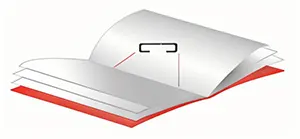
| Saddle Stitching | ~80 pages | Full | ★★☆☆☆ | $ | Thin magazines, weekly/biweekly publications, event programs, promotional booklets |
| Perfect Binding | ~200+ pages | No | ★★★☆☆ | $$ | Monthly/quarterly thick magazines, trade journals, annual issues |
| Wire-O / Spiral Binding | ~200 pages | 360° | ★★★☆☆ | $$ | Desk reference magazines, educational periodicals, cookbook-style mags |
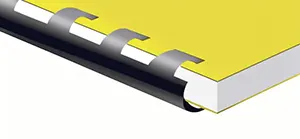
| Plastic Comb | ~150 pages | 360° | ★★☆☆☆ | $ | Internal newsletters, training periodicals, budget-friendly publications |
| Case Bound (Hardcover) | Unlimited | Partial | ★★★★☆ | $$$ | Collector's editions, annual retrospectives, high-end brand magazines, art publications |
The paper stock is arguably the most important material decision in magazine printing. It determines how your photography and advertisements look, how the magazine feels in the reader's hands, and significantly affects production cost.
| Paper Type | Weight | Finish | Best For |
|---|---|---|---|
| Gloss Art Paper | 80–200 gsm | High gloss, reflective sheen | Consumer magazines, fashion & lifestyle: makes photography vibrant. The standard for mass-market periodicals. |
| Matte / Silk Art Paper | 80–200 gsm | Low glare, satin sheen | High-end/luxury magazines, art publications, design portfolios: reduces glare, feels sophisticated. |
| Offset (Woodfree) Paper | 60–120 gsm | Matte, uncoated | Text-heavy magazines, newsletters, academic periodicals: lighter weight reduces postage costs. |
| Recycled / Eco Paper | 80–120 gsm | Textured matte | Sustainability-focused publications, eco-conscious brands, environmental reports. |
| Magazine (SC) Paper | 40–60 gsm | Semi-matte, super-calendered | High-volume mass-market magazines: lightweight, cost-effective, acceptable image reproduction at scale. |
Recommended specifications for different magazine formats. Adjust based on your content, budget, and distribution method.
Magazine printing follows a precise production workflow designed to ensure consistent color, sharp registration, and timely delivery for periodical schedules.
PDF files are checked for bleed (3 mm), image resolution (300 DPI minimum), CMYK color space, and font embedding. Pages are imposed into printer spreads: typically 4/4 (full color both sides) for magazine work. Cover and interior files are separated for different paper stocks.
A contract proof is printed on the specified paper stock. For magazines, both editorial spreads and full-page advertisements must be approved for color accuracy: especially critical when ad revenue depends on faithful color reproduction. Digital proofing is standard; physical proofs available for high-end runs.
Heidelberg offset presses print the job, typically on large-format sheets that carry 4, 8, or 16 pages per side. Color bars are monitored throughout the run for density, dot gain, and registration. Coated paper requires careful ink control to prevent set-off and achieve vibrant color.
Printed sheets are folded into signatures. For saddle-stitched magazines, all pages are folded together and stapled through the center fold. For perfect bound magazines, individual signatures are gathered in order and prepared for spine gluing.
Saddle-stitched magazines are stapled along the spine fold, then face-trimmed on three sides for a clean edge. Perfect bound magazines have the spine notched, glued with hotmelt or PUR, and the cover wrapped around the spine. Trimmed to final size.
Cover finishing (lamination, spot UV, foil stamping) is applied. Magazines are inspected for print quality, bound integrity, and trim accuracy. Shrink-wrapped in bundles, labeled for mailing or palletized for bulk shipping. Drop shipping to multiple distribution points available.
Unit price drops 50–60% from 1,000 to 10,000 copies. Offset becomes cost-effective at ~1,000+ copies for full-color magazine work.
Saddle-stitched magazines increase in 4-page increments. Perfect bound uses 16-page signatures. Even page counts on signature boundaries are most efficient.
80→150 gsm adds ~$0.20–0.50 per magazine. Gloss and matte art are similar in price. Offset is 15–25% cheaper than coated. Postage savings from lighter paper often offset higher unit costs.
Full CMYK (4/4) both sides is the magazine standard. Spot color (2/2) saves 20–30% but is rare: magazines rely on vibrant color for advertising revenue.
Saddle stitch is cheapest. Perfect bound adds ~20–30%. Hardcover adds 3–5×. Cover lamination (+ spot UV) adds minimal cost but drastically improves perceived quality and protection.
Check the price calculator above for a quick estimate, or contact us for a detailed quote on your magazine project.
Successful magazine printing goes beyond ink and paper. The best magazines balance editorial quality, visual design, and print production to create a compelling reader experience. Here are key factors that differentiate a great magazine from a good one.
| Element | Why It Matters | Print Production Notes |
|---|---|---|
| Editorial Content | Well-researched, engaging articles build credibility and keep readers returning issue after issue. Content quality directly impacts subscriber retention. | Text should be clearly readable at the chosen point size. Serif fonts for body text improve readability in long-form articles. Avoid reverse type (white on dark background) for long passages. |
| Visual Design & Layout | Magazine layout is an art form: the interplay of images, headlines, white space, and text determines whether a reader opens, browses, or engages. | Saddle-stitched magazines must account for creep (image shift toward the outer edge on inner pages). Spread images need careful alignment across the gutter. |
| Photography & Image Quality | Sharp, correctly colored images are non-negotiable. Blurry or poorly printed images destroy the perceived value of the entire magazine. | All images must be 300 DPI at final size. CMYK mode. Soft proof against the selected paper stock. Gloss paper makes images pop; matte paper reduces glare for gallery-style spreads. |
| Typography | Readable, consistent typography is the backbone of editorial design. Font choice sets the tone: classic serifs for authority, clean sans-serifs for modernity. | Minimum 9 pt body text for magazines. Avoid fonts under 8 pt. Ensure all fonts are embedded or outlined in the PDF to prevent substitution at print. |
| Advertising | Advertisements fund most magazines. Ad placement, sizing, and print quality directly affect advertiser satisfaction and renewal rates. | Ad proofing is critical: advertisers expect exact color matching. Set clear bleed and margin requirements in your media kit. Full-page ads should use the same paper stock as editorial for consistency. |
| Reader Engagement | Surveys, letters to the editor, interactive inserts, QR codes, and content prompts bridge the gap between print and digital. | QR codes should be minimum 15×15 mm at 300 DPI for reliable scanning. Perforated reply cards can be bound into saddle-stitched magazines. |
Get a free quote or speak with our magazine printing specialists about your project specifications.
Get a Free Quote Contact Us