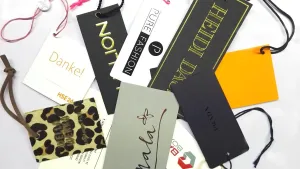
Hang Tag Printing
The Complete Guide to Custom Hang Tag Printing Professional custom hang tag printing s ...
View More
The Complete Guide to Custom Hang Tag Printing Professional custom hang tag printing s ...
View More
The Complete Guide to Envelope Printing Looking for custom envelope printing? ZXC Prin ...
View More
The Complete Guide to Notepad Printing Looking for custom notepad printing? ZXC Print ...
View More
The Complete Guide to Folder Printing Looking for custom folder printing? ZXC Print pr ...
View MoreCustom business printing for offices, agencies, and growing companies. Hang tags, envelopes, notepads, and presentation folders printed in-house since 2003 on Heidelberg offset presses. Full-color or spot color, standard and custom sizes, with finishing like foil stamping, embossing, lamination, and spot UV. Free quote and pre-production samples available.
Business printing covers the everyday printed items a company needs to run and present itself: hang tags on its products, envelopes going out in the mail, notepads on its desks, and folders handed across meeting tables. These pieces do not get the attention of a billboard or a product box, but they carry a brand into places where people actually handle it.
Most of these items are small-format and printed in runs that start around 250 pieces. That is the practical threshold where offset printing becomes worth the setup, and it is also where most companies begin ordering. Above that, unit costs drop quickly, which is why a 10,000-piece notepad run costs surprisingly little per unit.
At ZXC Print, business printing is organized around four product families:
A hang tag is the first thing a shopper touches on a garment or product, and often the last thing they see before the price. It carries the brand name, the price, care instructions, a barcode, sometimes a story about the product. It has to survive shipping, handling, and being clipped on and off, yet it is printed on a piece of card roughly the size of a business card.
That small surface is why material matters. A flimsy tag makes a high-end product feel cheap. Most of our clothing and accessories clients print on 300–400 gsm art board, and a good number add soft-touch lamination or matte lamination, which changes the feel completely. Foil stamping on the logo, embossing on the brand mark, or rounded corners are common finishing choices.
Shape is where hang tags get interesting. Because we die-cut in-house, tags can be any outline: a circle, a rectangle with a torn edge, a shape that echoes the product or the logo. Standard shapes cost less; custom dies are worth it once you know the tag will be reordered.
See material options, shapes, and pricing on the Custom Hang Tag Printing page.
An envelope gets opened before the letter inside is read. For direct mail, invoicing, or a wedding invitation, the envelope sets the tone, and a printed logo or return address costs almost nothing extra on the same run. This is one of the cheapest upgrades a business can make to its outgoing mail.
Envelope printing divides into two practical camps. Standard business envelopes, in DL, C5, or C4 with a window for invoices or statements, are usually printed in one or two colors and run in high volume. High-end work, like wedding invitations or client-facing mailers, is printed full-bleed CMYK, often with foil stamping, embossing, or a colored envelope stock underneath.
Paper choices matter more than people expect. Offset paper takes crisp printing and is fine for most business mail. Kraft paper gives a natural, uncoated look that some brands prefer. Art paper, usually 120–150 gsm, is the choice when the envelope needs to feel substantial. Window patching, peel-and-seal closures, and custom sizes are all done in-house, which keeps the turnaround short.
Explore sizes, stocks, and finishing on the Envelope Printing page.
A notepad sits on a desk and gets used. Every page a customer or employee tears off carries your logo, your phone number, your website. Few print products deliver that kind of repeated exposure for the money. Notepads are also one of the most common corporate gifts, which means they are usually ordered in quantity and need to look right.
The first decision is the binding. Glue-top pads (also called memo pads or scratch pads) are the simplest and cheapest, with perforated sheets that tear cleanly. Wire-O binding lets the pad lie flat and flip over completely, which people like for notebooks and planning pads. Saddle stitching is used when the piece runs more like a booklet. Each binding changes the price and the feel, and we are happy to recommend one based on how the pad will actually be used.
Paper is the second decision. Bond paper is the classic choice for writing, 70–80 gsm, easy to write on with pen or pencil. Offset paper prints brighter color for branded covers. Art paper is used when the cover needs to look High-end, often with lamination or spot UV on the logo.
Sizes range from pocket-size memo pads to A4 and custom. Quantities start at 250 copies. See the full spec list on the Notepad & Notebook Printing page.
A presentation folder is what a proposal, a contract, or a media kit arrives in. It does not have to be fancy, but when it is, the contents feel more valuable. This is the piece most often printed in smaller runs, because folders are usually ordered for a specific meeting, launch, or season rather than for continuous use.
The standard construction is a single-pocket A4 folder on 250–350 gsm art paper. From there, options multiply: a second pocket, a business card slot, a die-cut window, a tab, a custom shape. The cover carries the full-color printing and most of the finishing, which is why spot UV, foil stamping, and embossing are concentrated there.
For press kits and conferences, folders are often printed with lamination on the outside to survive being handed around all day. For law firms and financial services, a matte finish with foil on the logo is the common combination, because it reads as serious without shouting.
Custom sizes and die-cut shapes are available. Quantities start at 250 copies. Details and options are on the Folder Printing page.
| Product | Typical Stock | Common Finishing |
|---|---|---|
| Hang Tags | 300–400 gsm art board, kraft, synthetic | Foil stamping, embossing, lamination, rounded corners, die-cut shapes |
| Envelopes | 100–150 gsm offset, kraft, art paper | Window patching, peel-and-seal, foil, colored stocks |
| Notepads | 70–80 gsm bond, 80–120 gsm offset, art paper covers | Glue-top, wire-O, saddle stitch, perforation, lamination |
| Presentation Folders | 250–350 gsm art paper | Spot UV, foil, embossing, lamination, pockets, die-cut windows |
Four things determine what a business printing order costs. Quantity is the biggest factor, because offset setup is spread across the run, and the same folder that costs USD 1.2 per piece at 250 units can drop below USD 0.3 at 5,000. Paper grade moves the price next, especially when you step up from bond to art paper or add a synthetic stock for hang tags.
Finishing adds up in smaller increments but is where the visible quality comes from. Lamination, foil stamping, embossing, and die-cutting each carry their own cost and their own setup. Finally, size and complexity matter: a custom die-cut tag costs more than a rectangle, and an envelope with a window costs more than a plain one.
The practical advice we give most clients: decide the quantity first, because it changes every other recommendation. Then pick the one finishing touch that matters most to the brand, and skip the rest.
Each product family has its own page with full specifications, material lists, and options.
Related reading: marketing materials for stickers, brochures, flyers, and posters, and promotional printing for giveaways and branded merchandise.