
Perfect Binding Process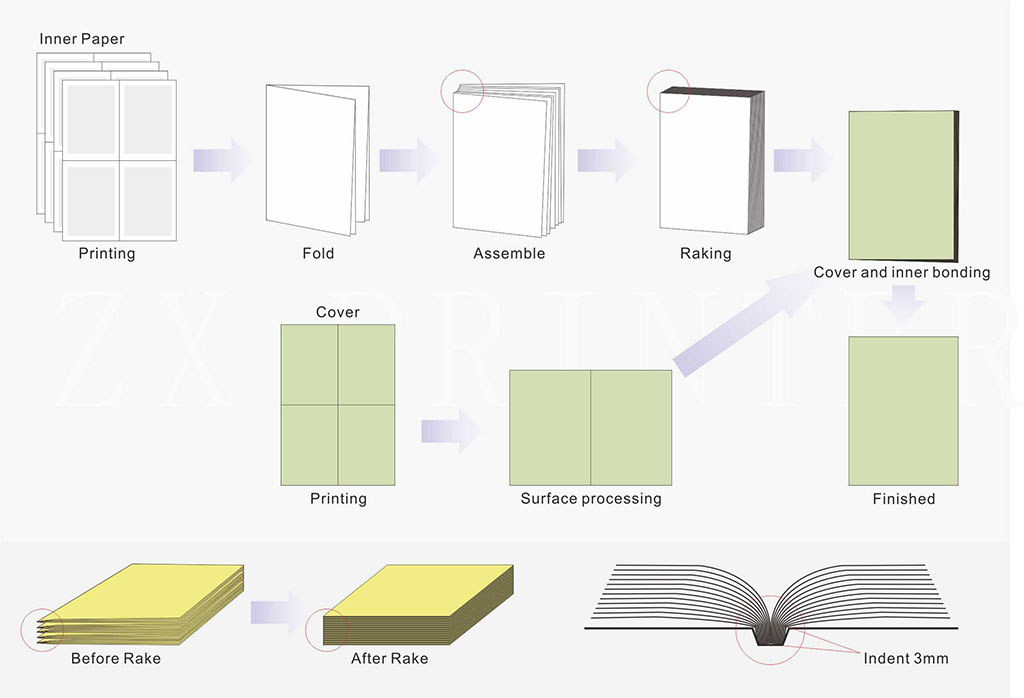
Sewn Binding Process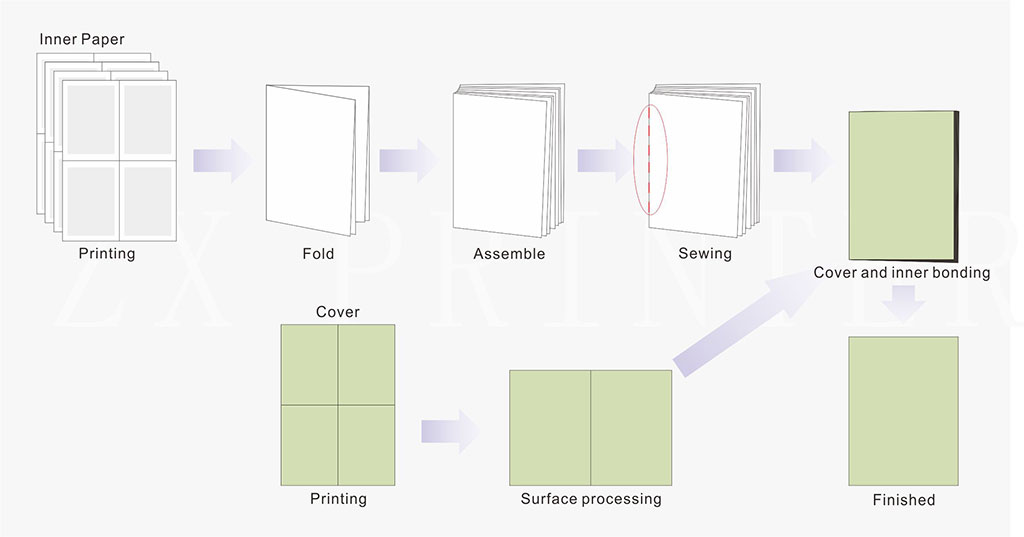
Perfect binding is a widely used technique that produces a clean, professional finish similar to common paperback books. Publications like National Geographic exemplify its use. This method is the standard for softcover book printing.
The process involves assembling various sections with a heavier paper cover. These sections are glued together at the spine using a strong adhesive. First, the spine is milled and notches are applied to it. This allows hot glue to penetrate deeply into the spine for a secure hold. Finally, the other three sides of the book are face trimmed. This finishing step enables the magazine or paperback to be opened easily.
Two common types of perfect bound books are mass market paperbacks and trade paperbacks. Mass market paperbacks (also called pulp paperbacks) are small, often in 16mo size. They are inexpensive and made with each sheet fully cut and glued at the spine. This construction can lead to pages falling out after extensive handling or over several years. Trade paperbacks are more durable. They are constructed with traditional gatherings or sections of bifolios, are typically larger in size, and command a higher price. The difference is often visible; one can look for the distinct sections along the top or bottom edges of the book to identify a sturdier trade paperback.
Looking ahead, the printing industry continues to embrace automation and digital workflows to enhance the efficiency of binding processes. Sustainability remains a key driver, with a growing focus on recyclable and biodegradable adhesives used in perfect binding. These advancements aim to meet the demand for both high-quality production and environmental responsibility.