
Saddle Stitch Binding: A Complete Guide for Booklets and Catalogs
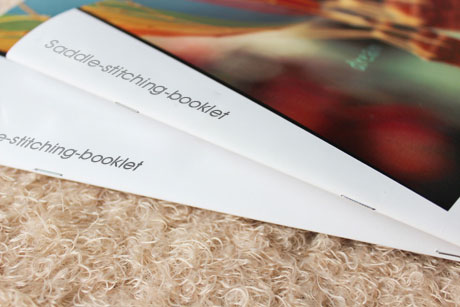
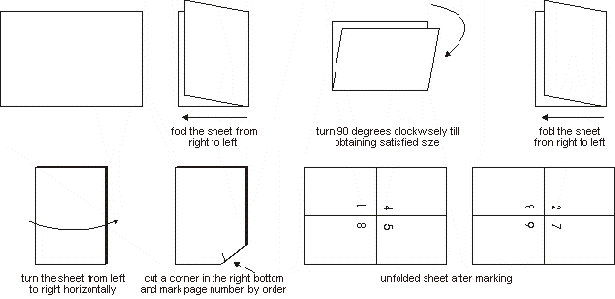
Saddle stitch binding is a fundamental and efficient method for assembling booklets and multi-page documents. The process begins by folding printed sheets (cut or uncut) into multiple folds, determined by the page count and sequence. Each folded set of multi-pages is known as a signature. These signatures are then collated in order, combined, and secured using staples.
The standard workflow is: Impression → folding → collating → wrappering → saddle stitching → cutting.
In saddle stitching, a project with a page count divisible by 4 is placed flat over a saddle-shaped apparatus. Staples are driven through the spine's gutter, binding the pages together. A typical saddle-stitched booklet uses two staples. This method differs from side stitching, where staples are placed approximately ¼" from the spine on the front cover. Side stitching prevents the piece from opening completely flat, a distinct advantage of saddle stitching.
Saddle stitching is optimal for lower page counts. As thickness increases, the phenomenon of creeping becomes more pronounced. Creeping occurs when inner pages extend slightly beyond the outer ones due to paper thickness accumulation. This can be corrected by trimming, but that risks compromised margins or cropped text. While designers can adjust inner page sizes to pre-empt trimming, this requires meticulous planning and increases production time and cost. Consequently, saddle stitching is best suited for smaller projects like thin magazines, calendars, zines, comic books, and pamphlets.
The technique continues to evolve alongside automation trends, while its inherent simplicity supports the industry's growing focus on sustainable, streamlined manufacturing.