
Custom Printed Napkins: A Guide to Flexographic Napkin Printing
Custom printed napkins are standard in restaurants and hotels across Europe and North America, and the market is growing quickly in China as dining brands look for low-cost ways to reinforce their identity. Most of these napkins are produced by flexographic printing, a process that suits thin, absorbent tissue running at very high speed. Knowing how the process works helps buyers specify quality and avoid common problems.
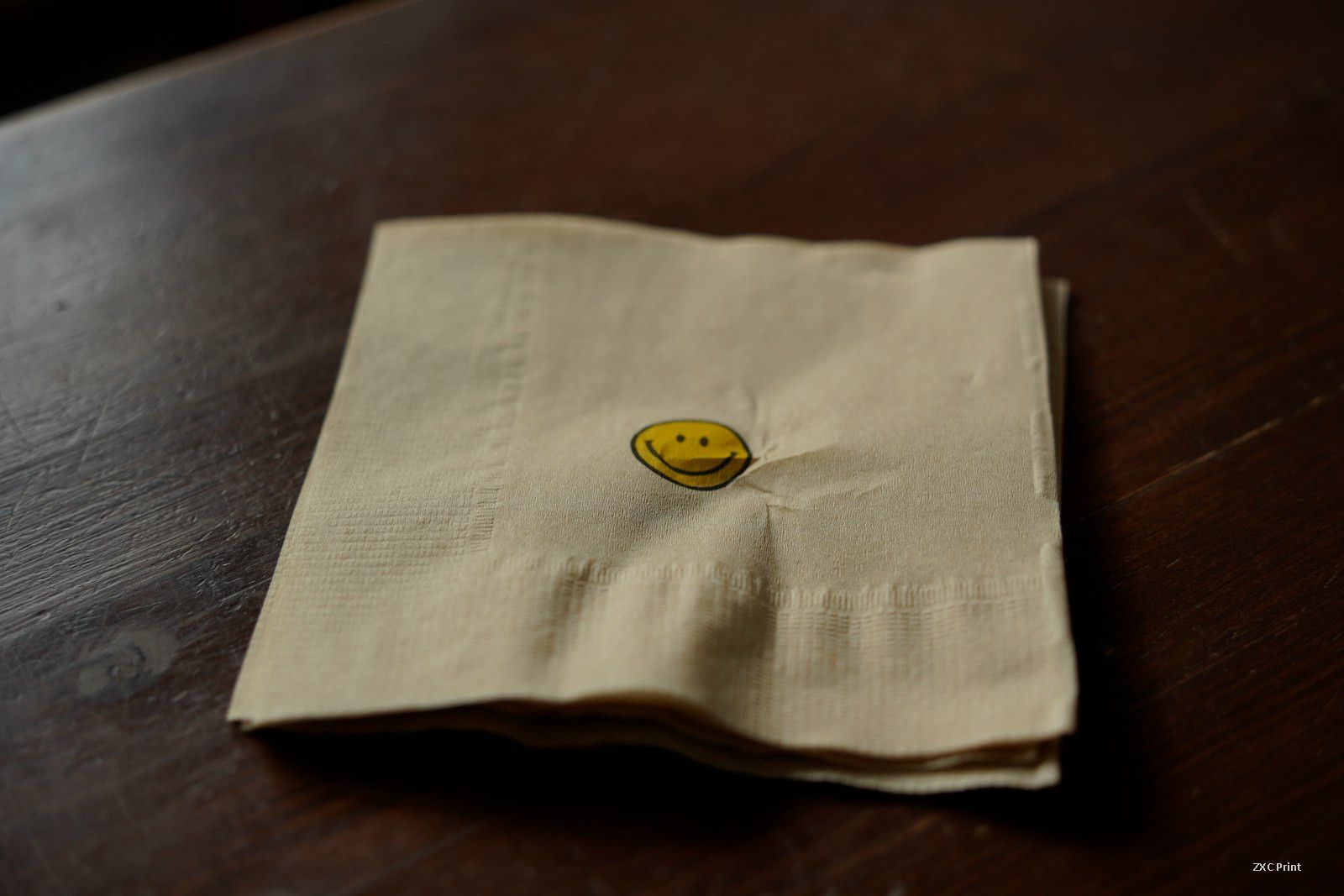
Napkin printing on flexo presses is not the same as printing on coated paper. The material is soft, porous, and fragile, so every stage from paper selection to final folding affects the result. This guide covers the four areas that matter most: paper, ink, press settings, and finishing.
Choose the right napkin paper
Surface strength comes first. Napkin tissue has a weak surface, and the tack of the ink can pull fibers loose, which shows up as picking or dusting in the print. Printers compensate with lower printing pressure and adjusted ink viscosity, so a slightly softer image is normal on tissue.
Absorbency is the second factor. Tissue is full of fine pores between its fibers, so it takes up ink quickly. If the ink binder soaks in too fast, the pigment stays on the surface and the print can powder, lose adhesion, and look dull. It may even strike through to the back of the napkin. Ink for napkins is therefore formulated with higher viscosity and carefully balanced drying to keep the color on top.
Smoothness and moisture content round out the list. Napkin paper has low smoothness, so prints dry matte rather than glossy, which is expected. Moisture matters more: tissue absorbs water from the air easily, and paper that is too wet stretches, wrinkles, and can separate between the layers of folded napkins. Store stock in dry conditions and let the pressroom control humidity.
Use food-safe, stable ink
Napkins touch mouths, hands, and food, so the ink must meet hygiene and environmental requirements. Water-based ink is the standard choice for napkin flexo printing. It contains no volatile solvents, which keeps it odorless and safe, and modern formulations include additives that stop the print from bleeding or dissolving when it meets water or alkaline substances.
Stability matters as much as safety. Water-based inks print best in a pH range of about 8.5 to 9.5. Above that range the ink thins out, dries slowly, and loses water resistance. Below it the ink thickens, dries on the plates and anilox roller, and causes dirty print, foaming, and plugged cells. Viscosity that is too low gives pale color and deformed dots; viscosity that is too high causes picking and uneven transfer. On a press running at 600 to 700 meters per minute, or about 10,000 napkins per minute, small shifts in ink behavior quickly become visible defects.
How the press handles a fragile web
Napkin presses are usually stack or satellite flexo machines with inline finishing. From unwinding to the finished stack, the line prints, folds, embosses, adds fragrance, counts, and packages in one automatic pass. Web widths can reach 2740 mm and machines carry up to eight color units.
Tension control is the deciding factor for quality on such a soft material. Modern presses use shaftless drive technology with digitally controlled rollers to keep tension and registration steady at speed. Drying usually combines infrared and hot air with water-cooled rollers, because tissue cannot take aggressive heat. Fiber dust is another challenge: loose lint builds up on the plates and causes dirty print, so many presses now fit vacuum cleaning units or special doctor blades to keep the plates clear.
Folding and embossing finish the job
Folding demands square edges and sharp corners, and tension control is what keeps the fold geometry consistent. Embossing adds a pattern that improves softness and absorbency while upgrading the look. It can be applied point to point, steel to steel, steel to paper, or steel to rubber, and can cover the whole napkin or just part of it.
What to ask your supplier
When ordering custom printed napkins, ask about the tissue grade, ply count, and ink system. Confirm that the ink is food safe and water based, and ask how the printer controls tension and removes fiber dust, since those two factors cause most quality problems. The same flexo technology that prints labels and other high-speed packaging also runs these jobs, so an experienced flexo printer will handle the details.