
Print has a strong environmental case when it is measured against screen media. A study by the French consultancy Carbone 4 compared books with e-readers and found that manufacturing a single e-reader releases roughly 250 kilograms of carbon dioxide, while printing one book accounts for about 1 kilogram. Paper can also be collected, reprocessed and used again, which keeps fibre in circulation instead of sending it to landfill.
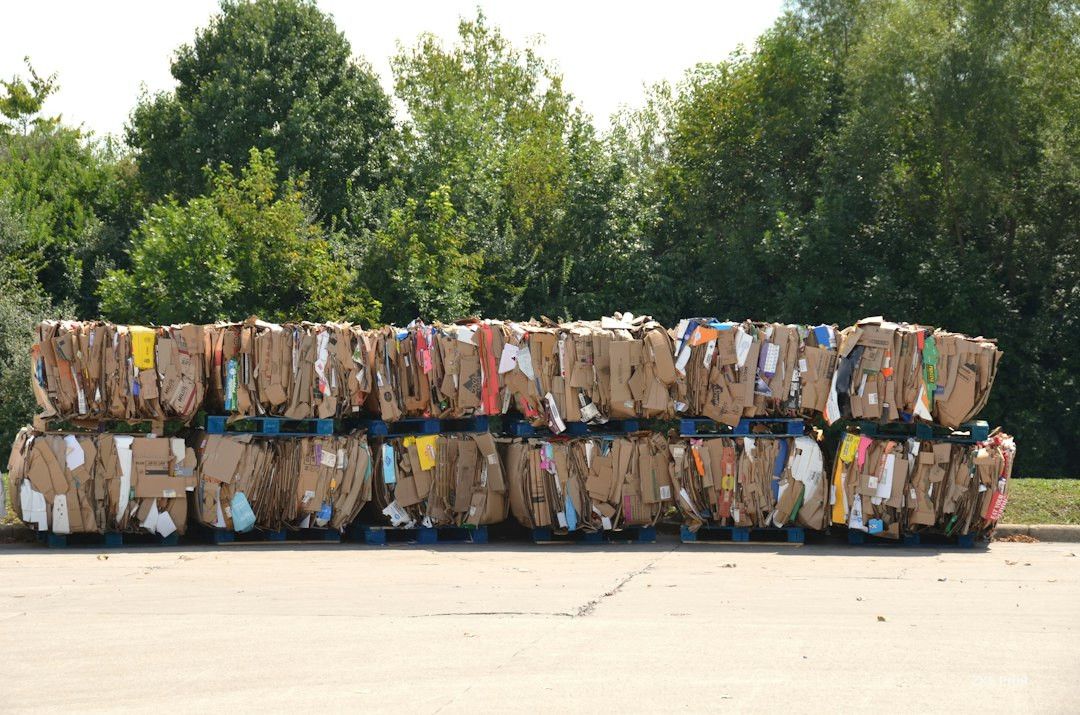
That advantage only holds if the recycling chain works. At a recent seminar in Munich, the International Association of Deinking Industries reported that several modern printing methods are making recovered paper harder to process. UV inks and coldset newspaper printing were both named as problem sources.
UV Printing: Hard to Recover
UV cured prints are close to unrecoverable on today's deinking lines. The association found one trait shared by every UV ink tested so far: the ink particles in recovered waste paper act as a serious contaminant, and they can be removed only partially, if at all. UV curable inks used in inkjet presses behave the same way.
When UV printed paper enters a recycling batch, it hurts the deinkability of the whole load. Waste paper of this kind has to be sorted out at the collection point, marked accordingly, or pre-treated by the paper merchant. The association is calling for new ink formulations that detach in the alkaline medium used to clean fibre and can then be flushed out by flotation.
Newsprint and Mineral Oil Migration
Engineer Putz from the Darmstadt University of Applied Sciences raised a second difficult issue: mineral oil migration from printing inks. The subject has drawn attention from consumer testing bodies, among them Oekotest and Stiftung Warentest, as well as the German public broadcasters ARD and ZDF.
Mineral oil migration into food packaging is real and measurable. Data show that packaging paper releases far more mineral oil than the permitted limit when dry food is stored in recycled board boxes. Putz estimates that 2.8 million tonnes of printed paper, including 600,000 tonnes of newspaper, go into board and packaging each year. On average, every kilogram of recycled paper brings about 3,000 milligrams of mineral oil into the packaging, and part of that can end up in the human body.
In theory, packaging paper could be kept separate from recycled print. In practice, this raises costs, creates logistics problems, and would also affect ink formulation. Mineral oil content in copier paper would rise, which in turn complicates compliance with environmental labels such as the Blue Angel in Germany. The report traces the problem back to the start of the process, ink manufacturing. Changing the blend in the ink is unavoidable, and researchers are asking how long the issue will take to solve. Millions of euros have already gone into the research, yet mineral oil migration from offset newsprint remains unresolved.
Digital Printing: Mixed Results
Deinkability of digital output varies by technology. Toner presses and some inkjet machines have no effect on deinking, while other inkjet and liquid ink systems are genuine contaminants. Over the past months, digital press manufacturers and the deinking association have traded public arguments over the question. Those discussions have now moved to a technical level.
What Comes Next
New printing methods, among them liquid ink, inkjet and UV inks, clearly make paper recovery harder, and different industries keep pointing at one another. Paper mills are reluctant to change the recycling technology they already run, the chemical and ink industry wants to keep its formulations, and press manufacturers want to keep their processes while asking paper makers to solve the deinking problem.
The printing industry depends on sustainable, environmentally sound production. Deinking trouble and contaminated substrates cannot be a permanent feature of the media it supplies. The only workable route is for mills, ink makers and press builders to treat ink formulation and deinking as a shared problem. That is how print keeps the environmental edge that first made it attractive.