
How Computer Color Matching Works for Spot Colors in Carton Printing
On a folding carton, color is often the first thing a shopper notices. A food brand's red, a cosmetic brand's rose gold, a toy brand's bright blue: these hues are usually printed as spot colors rather than CMYK builds, because four-color process inks cannot reproduce the full range of vivid, saturated tones that packaging designs call for. When the ink formula is off, the mismatch shows up on every box on the shelf, and the buyer sees it before anything else.
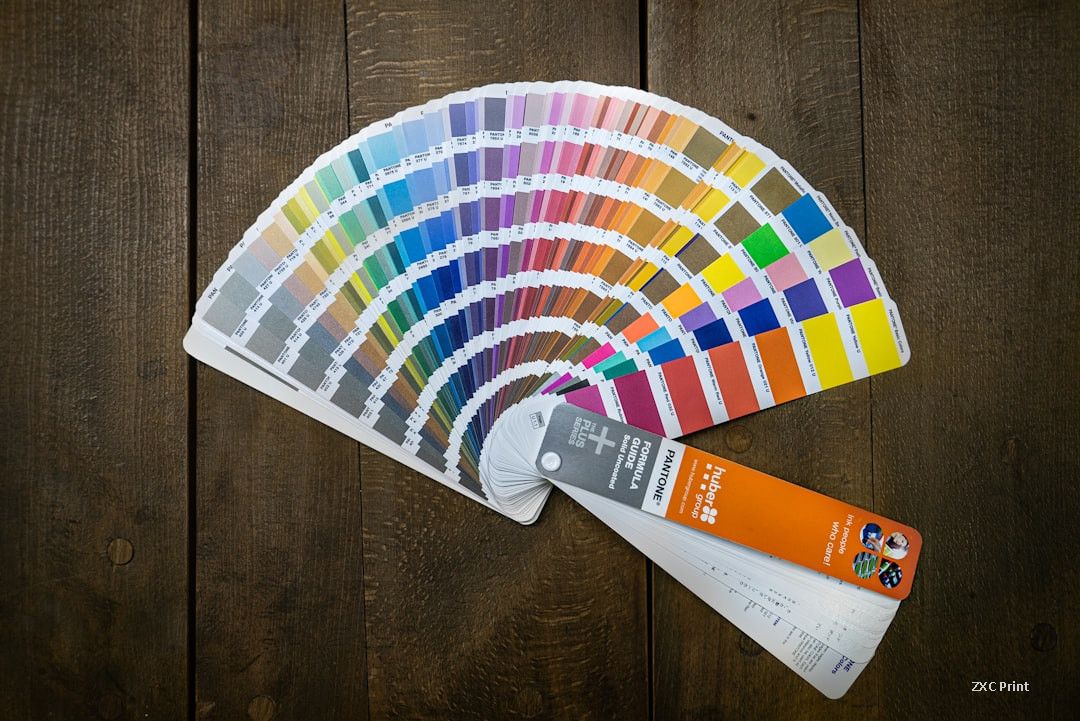
Matching a spot color used to be a manual exercise. An ink technician judged the hue by eye, mixed a trial batch, drew it down on paper, compared the result with the reference, then mixed again. The loop repeated until the color came close enough. Experienced operators could get there, but the process was slow and the first match rarely came quickly.
Why manual matching is costly
Trial-and-error color matching carries four hidden costs. The first is time. Each cycle of mixing, drawdown, and visual comparison takes minutes, and a difficult color can need many cycles. The second is ink. When the shop needs 5 kilograms of a color, repeated adjustments often leave 10 kilograms or more of mixed ink that cannot be returned to its base components. The third is inventory. Leftover batches accumulate, and a pressroom can end up storing a growing stock of nearly identical dark colors that nobody will use again. The fourth is disposal. Without a way to reuse them, surplus inks are either thrown away or blended into black, which is a poor use of material that still has value.
How computer color matching changes the process
Computer color matching (CCM) replaces visual guessing with measurement. A spectrophotometer reads how a reference ink absorbs and reflects light across the visible spectrum, and the software compares that curve with a database of base inks and previously mixed formulas. The result is a suggested recipe, usually close enough that one correction, sometimes none, finishes the job.
The savings add up quickly. A single match consumes roughly 30 grams of ink instead of kilograms, because the proof is drawn down with a small applicator on a small sheet. The press never has to be stopped for large test batches. Leftover ink can be scanned into the database as a new base material, so a stock color from an old job becomes an ingredient for the next one. The software can also rank candidate formulas by cost, letting the operator choose the cheaper recipe when two produce the same visual result.
Substrate changes are handled faster
Paperboard is never a perfectly neutral white. Different boards absorb and reflect light differently, so a formula that looks right on one substrate can shift on another. CCM accounts for this by using the spectral curve of the actual board, which makes switching substrates faster and more predictable than re-running manual trials.
What this means for print buyers
For brands and designers, the practical effect is consistency. With measured formulas stored in the database, a carton produced in a second run, or on a different substrate, can be matched to the original within a much smaller tolerance. Rework and rejected batches become rarer, and proofing cycles shorten.
You can help the printer help you. Send a physical swatch or a reference number for the spot color, state which surface (coated or uncoated) it will be printed on, and ask for a drawdown proof rather than a screen preview when the color matters. When you order folding cartons with brand-critical colors, a printer that uses computer color matching is more likely to deliver the shade you approved, run after run.