How Film Lamination Affects Book Cover Quality and Perfect Binding
Lamination is one of the most common finishing steps for printed book covers, yet few buyers stop to think about how it influences everything that happens later on the production line. Most educational and trade paperbacks today are covered with pre-coated thermal film: a clear BOPP film base that already carries a dry layer of hot-melt adhesive. When the film is pressed onto the printed sheet under heat, the adhesive melts and bonds the film to the ink and paper below. Understanding this simple mechanism helps explain why some covers look glossy and flawless while others bubble, peel, or fail at the spine.
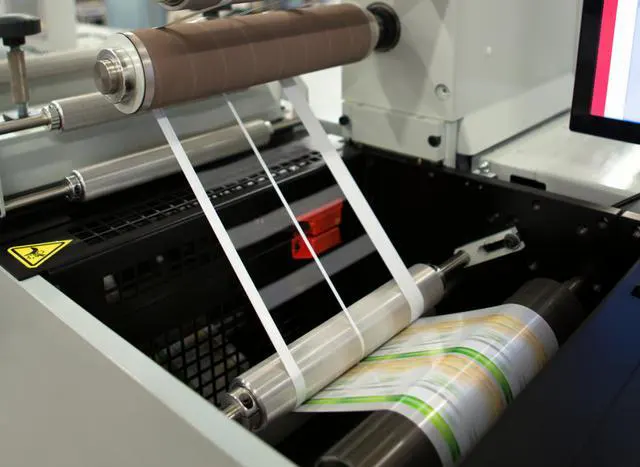
Three variables control the outcome of pre-coated film lamination: temperature, pressure, and speed. They act together as one physical process, and getting the balance right is what separates a clean, durable cover from a rejected one.
Temperature is the most critical factor. The adhesive on pre-coated film is a hot-melt glue, and temperature determines how completely it melts, how evenly it flows across the surface, and how deeply its molecules penetrate the film, the ink layer, and the paper fibers. In practice, a working temperature of roughly 80–100 °C gives the best result: the film leaves the hot roller bright, haze-free, and without bubbles. Set it too low and the gloss drops and adhesion weakens; set it too high and the film surface blisters into uneven bubbles.
Pressure matters almost as much. Paper surfaces are never perfectly flat, and it is the pressure of the laminating roller that pushes the molten adhesive into the texture of the sheet, squeezes out trapped air, and allows full contact between film, ink, and paper. Adequate pressure produces a uniform, glossy, streak-free finish and helps the lamination survive the mechanical stresses that come later, such as creasing and foil stamping.
Speed sets how long the film-and-paper sandwich stays under heat and pressure. If the line runs too fast, the adhesive does not have time to wet out the surface, resulting in weak bonding and a hazy appearance; too slow, and production becomes inefficient and the film can even blister. As a rough benchmark, many shops run folio-size sheets at about 10–20 sheets per minute, and slower on machines with small hot rollers.
For buyers, the most important part of this story is what happens after lamination: the cover still has to be creased, sometimes foil stamped, and finally bound. The classic failure is spine delamination, where the film lifts or bubbles along the spine of a perfect-bound book and the cover separates from the glue. This is not a random defect; it is directly linked to how the laminated cover was cooled after it left the hot roller.
Hot-melt adhesive takes roughly 10–15 seconds to cure. If freshly laminated sheets are wound into rolls and left to cool slowly, the heat trapped between the layers allows the adhesive to form crystals. Crystalline adhesive becomes much more sensitive to heat and can soften again when the cover is later heated during perfect binding, which is exactly when the spine bubbles and peels. Modern laminating lines solve this with water-cooled rollers and immediate sheet cutting, creating a fast chill zone that locks the adhesive into a stable, non-crystalline state. If you are choosing a printer, it is worth asking whether their lamination line has water cooling and instant cutting, because it directly affects whether your covers stay flat and firmly attached.
When you receive laminated covers, inspect them under raking light: the surface should be uniformly glossy, with no haze, bubbles, wrinkles, or edge lifting, and the spine area should show no signs of delamination after binding. These simple checks tell you a great deal about the discipline of the production line. And when you plan a print run, remember that cover lamination is only one link in the chain: paper choice, ink coverage, and binding method all interact with it. Professional book printing services treat lamination and binding as one system, and a good printer will advise you on the best combination for your project.