
Paper Cutter Reliability: How Equipment Maintenance Affects Your Print Job
Trimming is the last step in a print run, and it is also one of the most mechanical. A guillotine cutter is a precision machine of steel blade, hydraulic clamp, and cam-driven controls. When it is well maintained, every copy comes out square and identical. When it is not, the faults show up directly in the finished books you receive — uneven edges, inconsistent trim sizes, or even visible blade marks. Understanding how these machines fail helps you know what to check when a job arrives and why maintenance matters to the printer you choose.
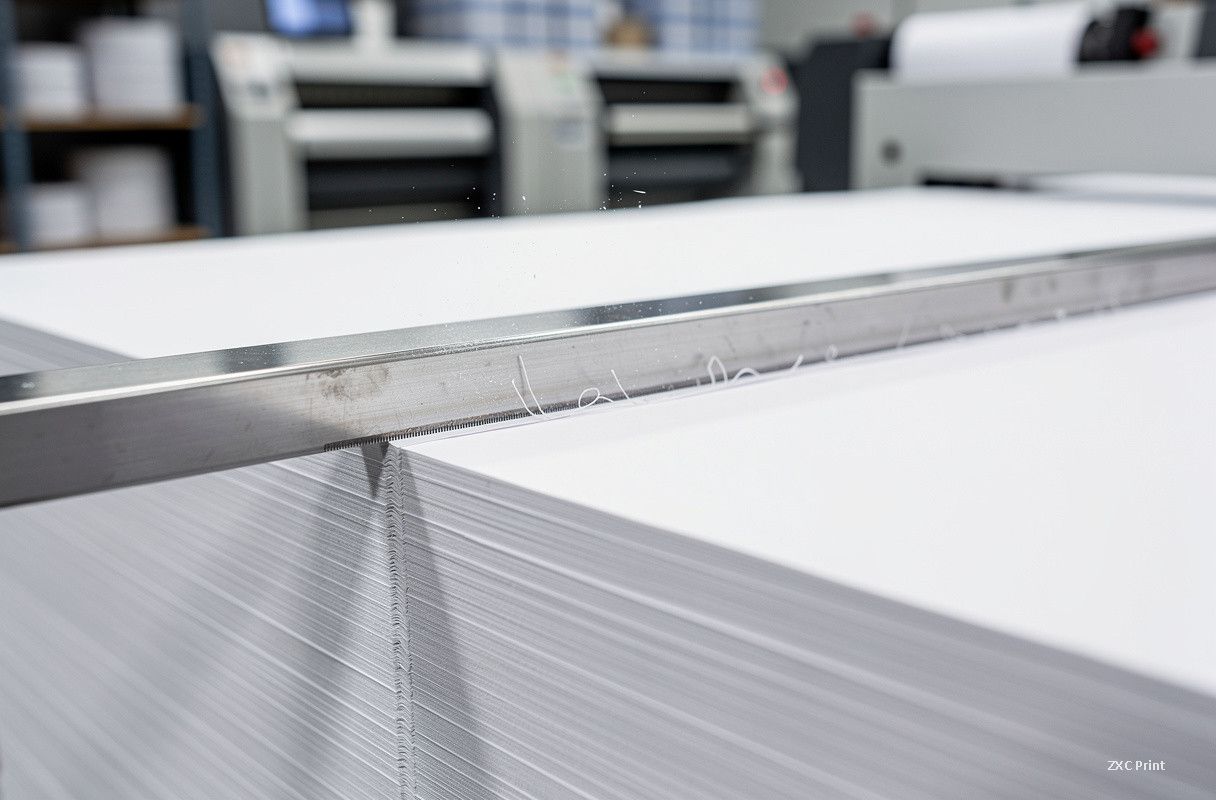
One of the most common failure points is the worm gearbox that drives the blade. Inside, a small hydraulic cylinder presses the blade down through the stack. Over time, the polyurethane seal inside this cylinder wears out. The first sign is oil rising in the gearbox sight glass or leaking from the filler hole. The practical effect is a loss of cutting force: the machine may show normal hydraulic pressure, yet the blade stops cutting cleanly through the paper. For your job, that means a rough edge or an incomplete cut that has to be trimmed again — or worse, sheets that pull fibers instead of slicing cleanly.
A second common cause of poor cuts is a broken cross pin on the blade push rod. When this small part fails, the clutch cannot engage and the blade will not descend at all. Operators usually notice this first as the knife not cutting even though pump pressure reads normal. Faults like this are quick to diagnose but require the machine to be opened up, so they usually mean downtime. When you are planning a delivery date, knowing whether your supplier keeps spare parts and a service schedule on hand is worth more than a discount.
Unusual noises during idle running usually point to bearings in the pulley or the worm shaft running dry or damaged. Bearing failure is a slow process: the cut becomes gradually less consistent before the machine finally stops. Because the drift is gradual, many shops only notice it once trim tolerances have slipped. That is why printers that calibrate their cutters regularly and keep maintenance logs produce more consistent results than those that wait for breakdowns.
Hydraulic air is another hidden culprit. Air trapped in the oil lines makes the clamp vibrate as it presses down and can stop the blade from cycling correctly. In modern S-series machines, pressure relays have been replaced with time relays to control clamping, but the principle is the same: the clamp must grip the stack firmly and evenly before the blade moves. If the clamp is weak or jerky, the middle sheets can shift during the cut, leaving a bowed stack and inconsistent dimensions from top to bottom.
For buyers, the practical takeaway is simple. When you receive your sample, measure the trimmed edges, check that all four corners are square, and confirm every copy matches. Ask your supplier about blade maintenance and calibration schedules — a printer that can describe its cutter maintenance plan in concrete terms is a printer that protects your quality. The edges of your book are decided in the last minute of production, and they are decided by equipment care as much as by design.