Most printing is described with four letters: CMYK. Ask about a five- or six-color press and the answer gets less tidy, because the extra units do not carry a fixed set of inks. The machine has more print stations, and what runs in stations five and six depends on how the press was ordered and what the job needs.
The Four Units Everyone Starts With
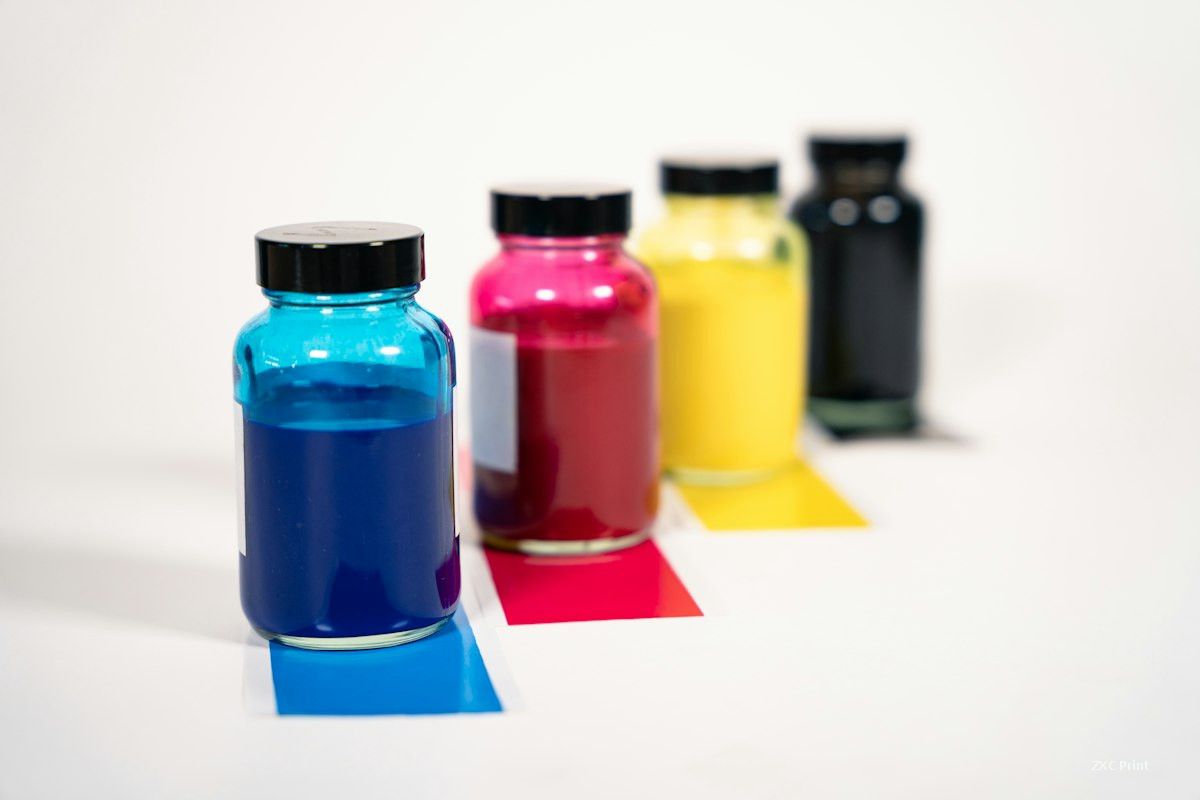
Cyan, magenta, yellow and black form the base of process printing. The first three are transparent inks that combine on paper to make a wide range of hues. Black is included for a practical reason: text edges, deep shadows and neutral greys are cleaner and cheaper to print with one dedicated ink than with three overlapping ones. A four-color press handles the great majority of books, catalogs and marketing material.
Hexachrome: CMYK Plus Orange and Green
The best known six-color system is Hexachrome, introduced by Pantone in 1995. It keeps cyan, magenta, yellow and black, then adds orange and green. Most of the additional inks contain fluorescent pigment, which pushes oranges, greens and some skin tones beyond what ordinary process inks can reach. The wider color gamut let printers match a larger share of spot colors without mixing a custom ink for each one. Hexachrome never became the default, because it needs special separations, software support and six clean units running together, and many jobs simply do not contain colors that benefit from it.
The More Common Setup: CMYK Plus Two Spot Units
In day to day production, a six-color press often runs four process inks and two spot colors. A brand may specify a precise red and a metallic silver, and those two inks take the last two stations. Another common layout is five colors plus a coating unit, where the sixth station applies varnish or aqueous coating instead of ink. Packaging work, labels and premium covers are where this arrangement shows up most often, since an exact brand color can be more valuable than photographic range.
What the Extra Units Cost
Every added station means another plate, another ink, another set of rollers to clean and another make-ready step. Six-color work therefore carries a higher setup cost, and the gap grows on short runs. The choice comes down to the design: if the artwork relies on a specific spot color or on saturated oranges and greens, the extra units pay for themselves. If it is a text-heavy book with a few photographs, four colors will look the same and cost less.
Reading a Press Specification
When a quote mentions a six-color press, ask what the last two units will hold. The answer might be orange and green, two brand spot colors, or one spot color and a varnish. That detail changes both the price and the proofing workflow, and it is worth settling before plates are made. A press with six stations is not automatically better than a four-color machine; it is simply more flexible when a job has colors that CMYK cannot hit.