
Wrinkling and Bond Strength Problems in Laminated Film Production
Why Transverse Wrinkles Form
Wrinkles that run across the web, most often near the two ends of a finished roll, point to a mismatch between the substrates. The usual pattern is a tunnel where one film stays flat and the other lifts away from the bond line.
On the material side, two faults lead the list. The adhesive may lack enough initial tack to hold the films together before curing, or the surface tension of a substrate may be too low for the adhesive to wet it properly.
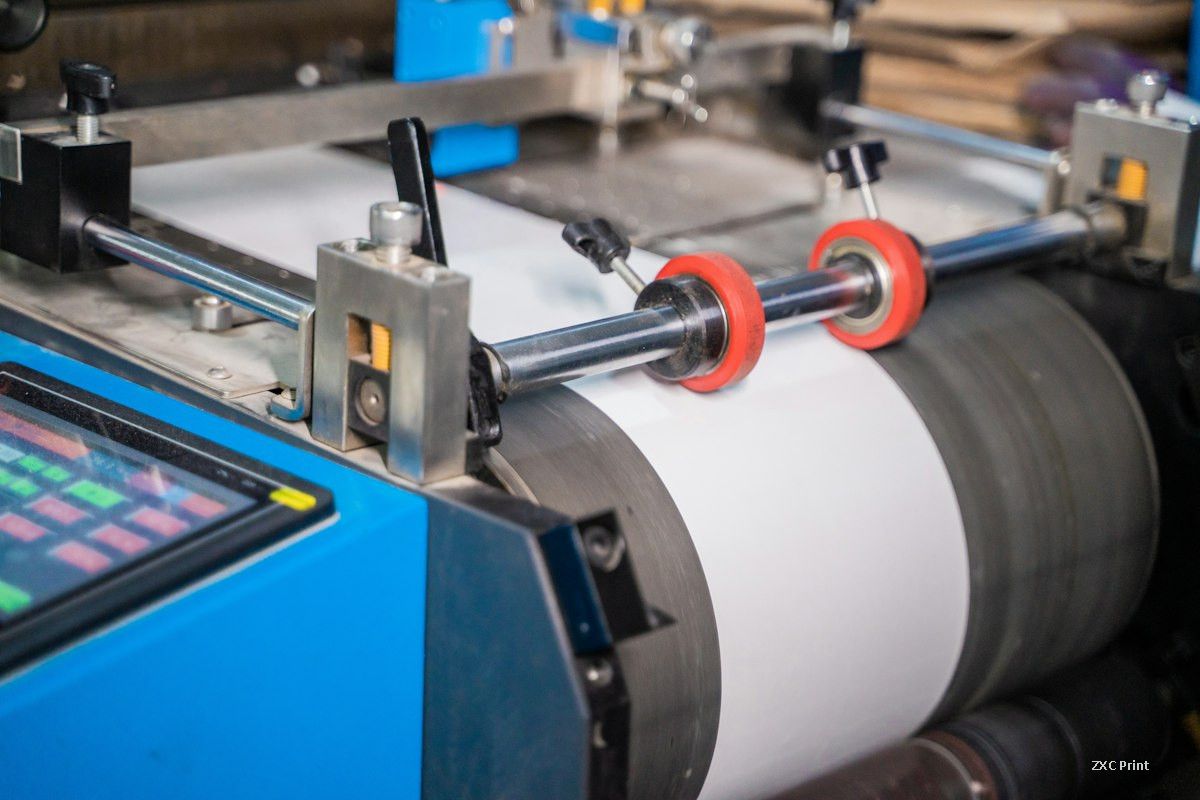
On the machine side, the unwind tensions of the two base films are the first thing to check. Tension that is too high on one side and too low on the other distorts the web before it ever reaches the bond nip. A BOPP and aluminium foil structure is a good example: if the BOPP runs under heavy tension it stretches in the drying tunnel, while the foil, with its low elongation, cannot follow. Once the BOPP cools and contracts after lamination, the foil is pushed outward and a row of tunnels appears across the web.
Other process faults produce the same result. Too little adhesive, or adhesive spread unevenly, weakens the bond locally and lets wrinkles start at those spots. A rewind tension that is too low leaves the roll loose, so the film that tends to shrink has room to do it; winding the roll tight and moving it straight into the curing room presses the layers together and removes that freedom. A drying oven that runs too cool and has poor air movement leaves solvent in the adhesive, so it never dries enough and the two films can slide against each other.
Poor Bond Strength
A laminate that peels apart easily is checked in the same order: adhesive first, then substrates, then ink, then machine settings.
Adhesive and Substrate Selection
Converters often want one adhesive that covers every job. In practice a general purpose grade is a compromise. Grades such as YH2000 and YH2000S cover a wide range, and YH2000S can handle almost every structure except retort applications, including foil laminates. Their peel strength still trails the dedicated grades, so retort films, metallised films and media resistant structures need an adhesive formulated for the job.
Substrate surface tension matters just as much. PE and CPP films should not fall below 38 dyne when they are laminated. Freshly made PE and CPP film often measures above 43 dyne, but the value drops quickly after production: about 38 dyne is held for a month, and 35 to 36 dyne after three months. Buy and store in smaller lots, and test the dyne value before the film goes on the machine.
Some converters see good bond strength right after lamination and a weaker result the next day. The reason is in the film itself. Heat stabilisers, antioxidants, anti blocking agents and slip agents added during film making migrate from the core to the surface over time. A heavy additive load can cut peel strength sharply. The effect often shows up within seven days at room temperature, and can appear after only 24 hours in a curing room.
Ink Related Failures
Two patterns appear when ink is involved. If the ink lifts away over a large area during peeling, the adhesive is not penetrating the ink layer well, the resin in the ink is not suitable, or not enough adhesive was applied. A higher solids, lower viscosity adhesive, a different ink, or a ten percent increase in coating weight on full coverage work usually solves it. If the bond is fine over the ink but weak in the unprinted areas, the batch of ink most likely carries too much anti blocking agent.
Machine Settings to Review
When the adhesive coating weight will not reach its target, check the coating unit before changing the formula. A nip roller temperature that is too low leaves the adhesive under activated and unable to wet the ink properly, and the effect is clear on full coverage foil work. Different structures also call for different settings, which is why PET, aluminium foil and PE laminates are run differently from PET, metallised film and PE laminates.
None of these defects is random. Transverse tunnels and weak peel both trace back to tension, surface energy, adhesive choice and oven conditions, and each of those can be measured before a full production run is committed.